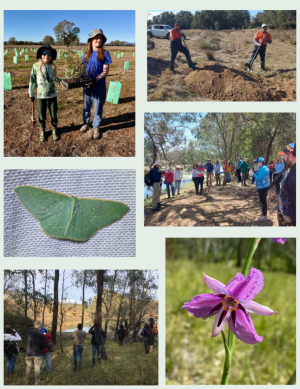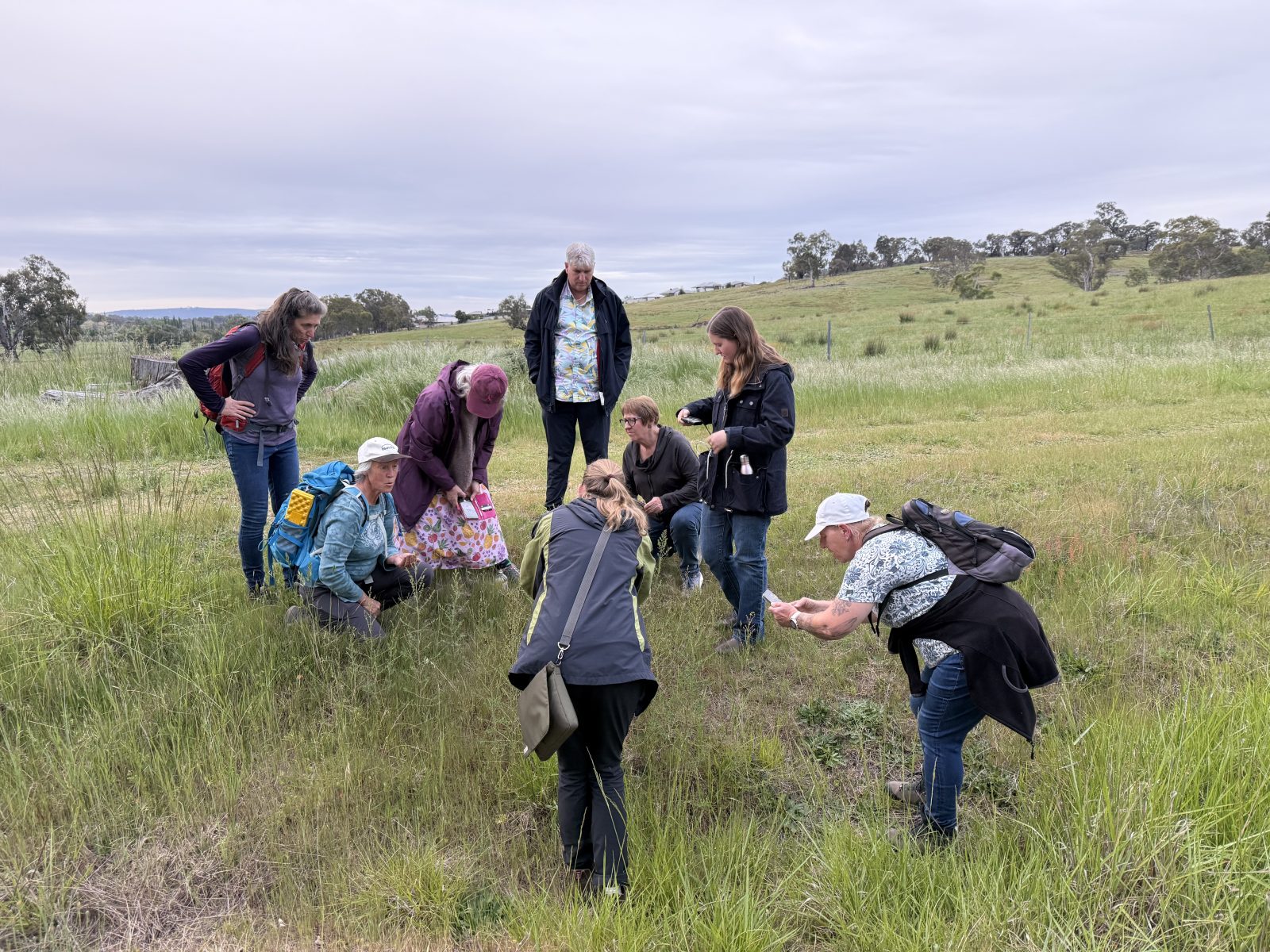
The Great Southern BioBlitz (GSB) event series continues to be popular among Albury Wodonga and surrounds locals. Thank you to Karen Retra from Wodonga Urban Landcare Network for all her hard work in organising and running these events with Parklands Rangers helping out.
GSB events were held all around the southern hemisphere from Oct 24-27 with almost 300,000 nature observations recorded in total across the globe. Well done to Coffs Harbour Region for coming in first place overall with 2,555 species recorded!! And although our region didn’t get quite that many, the community still did an amazing job, recording 428 species this year! That’s up from 305 species in 2024 and 184 species in 2023!
Four events were scheduled over the recording period with only one being washed out due to rain. We spotted nature in an urban setting, went on a nature walk, and moth night again attracted lots of people as well as moths!
A popular observation were these little critters – the St. John’s wort beetle (Chrysolina hyperici). These beetles are an introduced bio-control agent for, you guessed it, the introduced and invasive St. John’s wort (Hypericum perforatum). The adult beetles feed on the new growth during the spring before laying their eggs on the underside of the leaves. The larvae also feed on the leaves when they hatch but then burrow into the soil to pupate. Both the St. John’s wort plant and the beetle are native to Europe and Asia.

Moth night at Castle Creek Conservation Reserve was a success with a few different species to last year. We even managed to record an endangered Bogong moth (Agrotis infusa; 1). During the spring, these moths migrate to the Australian Alps where they remain dormant until they return to their breeding grounds in Queensland, New South Wales, Victoria, and South Australia in the autumn. Droughts and climate change, as well as disruptions along their migratory route have caused sharp declines in their numbers in recent years and they were listed as endangered in 2021.
Other visitors to the moth sheet included the kurrajong bag moth (Dichocrocis clytusalis; 2), the long-nosed lycid beetle (Porrostoma rhipidium; 3), the black geometrid moth (Melanodes anthracitaria; 4), a kind of leaf beetle belonging to the genus Paropsisterna (5), the red-lined looper (Crypsiphona ocultaria; 6), the double yellow-patched footman (Termessa zonophanes; 7), a kind of Christmas beetle called the hairy spotted beetle (Anoplognathus velutinus; 8), and an emerald moth (genus Chlorocoma; 9).


It was very rainy during the Bear’s Hill walk, but the walk along House Creek the following morning provided some interesting records including a common grass blue butterfly (Zizina otis), a transverse ladybird beetle (Coccinella transversalis), and some grey mistletoe (Amyema quandang) which grows mainly on Acacia species.

Thanks to everyone who ventured out into nature and recorded some local species, and especially to those who came along to the events and gave some citizen science a go! Until next year…. happy nature spotting!
All photo credits in this article go to Karen Retra and Parklands staff.