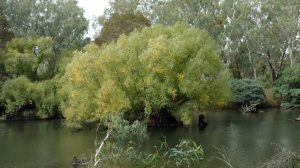
World Wetlands Day falls on 2 Feb each year and the 2026 theme of ‘Wetlands and Traditional Knowledge: Celebrating cultural heritage’ is particularly meaningful to Parklands Albury Wodonga. Thanks to the Victorian Government’s Nature Fund – Caring for Country Stream, Traditional Owners from Duduroa Dhargal Aboriginal Corporation (DDAC) have been engaged as Rangers to manage the nationally significant Ryans Lagoon Wetlands at Bonegilla over the past three years.
The main focus of the 2026 theme is to highlight the “role of traditional knowledge in sustaining wetland ecosystems and preserving cultural identity” and Parklands is proud of what has been achieved through the co-management arrangement between DDAC and Parklands Albury Wodonga. By nurturing and enabling partnerships that collectively contribute far more than any partner working in isolation, not only have the biodiversity and conservation outcomes at the wetlands improved, but the wetlands themselves have provided a greater sense of connection to Country and a place for the sharing of knowledge for Traditional Owners.
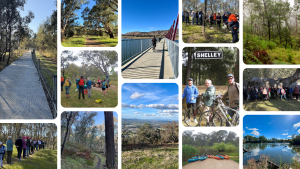
The activities at Ryans Lagoon are the result of collaboration and working together to share knowledge and skills, and give encouragement. Over the past three years, 835 people from 204 stakeholder groups have visited the site and 94 partnerships were established!
Work began at the site in mid-2023 when the Learnscape began at take shape. This area now consists of both men’s and women’s shelters, which were constructed with materials obtained through cultural harvesting at a Trust for Nature property near Beechworth. Also within the Learnscape is a dance circle and areas for workshops. Most recently completed is the off-grid Education Centre.


In 2024 and 2025, activities run by and for Aboriginal people included men’s tool making, women’s weaving, and emu egg carving, digging stick, and possum skin workshops. Also held in 2024 was the ‘Our Culture, Our Futures’ expo, which showcased the cultural connection at Ryans Lagoon as well as provided networking opportunities with other local stakeholders and organisations. In all, 174 Aboriginal people have been involved in workshops, burns, thinning, and harvesting.
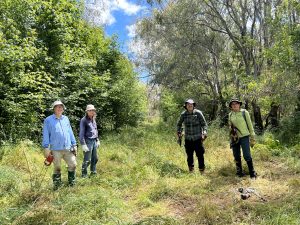
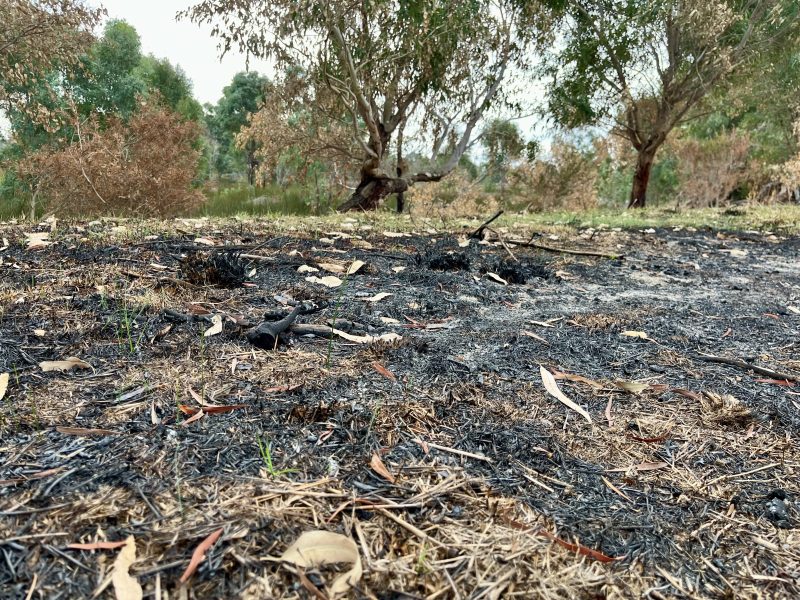
To improve the habitat surrounding the wetlands, grazing was removed and a combination of spraying, mowing, and cultural burns was used to eliminate the significant spread of weeds such as thistles. DDAC was able to demonstrate the low-risk nature of these cool burns and lessons were learnt by all parties involved including Country Fire Authority, Forest Fire Management Victoria, and Parks Victoria. Planting of native trees, shrubs, and grasses will restore a mix of understorey and canopy which will support a range of native animals.
Another noteworthy outcome for the wetlands during this project was the two cultural waterings which took place in the spring months of 2024 and 2025. Given the deep cultural importance of flora and fauna to Aboriginal people, it has been vital to restore the wetlands as the water brings and sustains life. With dams in place that disrupt the natural flow of water, the pumping of water into the lagoons when they would otherwise dry up meant that plants and animals could once again thrive.

To understand the biodiversity of the wetlands and the effects of the cultural watering, wildlife and vegetation monitoring at the site has been undertaken collaboratively with partners such as BirdLife Australia whose surveys identified five flagship bird species including flame robin, restless flycatcher, brown-headed honeyeater, crested shrike-tit, and western greygone. AudioMoths were installed at the wetlands during spring in 2024 and 2025 by North East Catchment Management Authority to record both audible and ultrasonic frequencies after the two cultural watering events. Recordings collected on the Frog ID and Frog Census apps have been verified for Sloanes froglet, eastern common froglet, eastern sign-bearing froglet, Peron’s tree frog, spotted marsh frog, striped marsh frog, eastern banjo frog, and eastern dwarf tree frog. Wodonga Urban Landcare specifically monitored the endangered Sloane’s froglet. DDAC have also been working with Turtles Albury Wodonga and La Trobe University to monitor turtle populations and turtle breeding. Netting continues to be installed across turtle egg nests as a protective measure. A pilot to train foxes to eat quail eggs rather than turtle eggs appears to have been successful. eDNA (environmental DNA) water sampling done by the Arthur Rhylah Institute revealed the potential presence of the threatened flat-headed galaxia. Water Technology conducted vegetation surveys at 12 plots within the wetlands in May 2025 which will be compared with the previous two years’ data to understand the changes as a result of cultural watering the previous year.

Overall, this project improved the biodiversity of the wetlands through work to the landscape and the return of spring water flows which benefited threatened or culturally significant species. It also encouraged partnerships and gave Traditional Owners from Duduroa Dhargal Aboriginal Corporation the opportunity to lead traditional land management activities and to share knowledge and skills on Country.