We all know hot weather means our scaly friends are out and about – just ask Ranger Dan and he’ll attest to the abundance of reptiles, particularly snakes, around our local parks and reserves at the moment.

So what better time to take a gander at this magnificent Field Guide to the Reptiles of Albury-Wodonga, written by local Associate Professor of Ecology and Herpetology at Charles Sturt University, Damian Michael.

Damian has been very generous with his time and expertise, leading walks around Albury Wodonga for Parklands and Friends of Nail Can Hill over the years. His passion and enthusiasm for all things reptile have no doubt inspired the next generation of herpetologists!
A prolific author of both scientific articles and books, Damian’s most recent contribution to conservation in the region is a field guide with beautiful photographs of the 35 reptile species found locally along with information about the importance of reptiles to indigenous culture, threats to reptiles, and a bit of myth debunking (reptiles may be scaly, but are NOT slimy!). The guide is easy to use and what’s better is that you can access it digitally here and from the resources section on our website.
In Damian’s guide, you’ll also find a section on what makes good habitat for reptiles and how vital ‘microhabitats’ are to reptile survival – these are places within an ecosystem that provide shelter such as rock crevices, leaf litter, fallen logs, and termite mounds.
These places of shelter are becoming more important than ever as the severe heat and drought that our region has been facing over the past couple of years have been making life tough for not only reptiles, but all of our native animals.
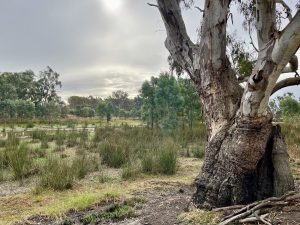
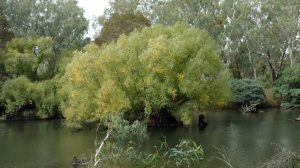
Parklands Albury Wodonga is working to improve habitat to increase local biodiversity in places like Turtle and Browns Islands through our ‘Restoring Roosting Refuges’ project which mainly aims to provide habitat for vulnerable grey-headed flying-foxes. But any time habitat is improved, it benefits a whole range of species, including reptiles. This project removes woody weeds and plants native seedlings which will mean more shelter and food sources in the future. It’s important to note that the removal of woody weeds is done in a way that does not disturb the soil or clear the ground in any way – and that’s a plus for reptiles who need an undisturbed, ‘messy’ ground layer to shelter and find food.
If you want to help out our local reptiles, there are some simple things that you can do:
Provide water – place shallow bowls of water in shady, quiet, and secure spots in the garden for thirsty reptiles, ensuring they have stones or sticks inside to prevent drowning.
Create shade – set up garden umbrellas or create shade with tarps to provide cool areas.
Leave them alone – if a reptile is spotted in your garden, it is best to keep pets and people away, allowing it to recover quietly.
Contact a veterinarian – if you find a reptile in distress, contact a local wildlife rescue group like Wildlife Victoria at (03) 8400 7300.
Our ‘Restoring Roosting Refuges’ project is funded by the Australian Government’s Natural Heritage Trust under the Urban Rivers and Catchments Program.