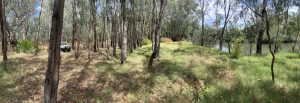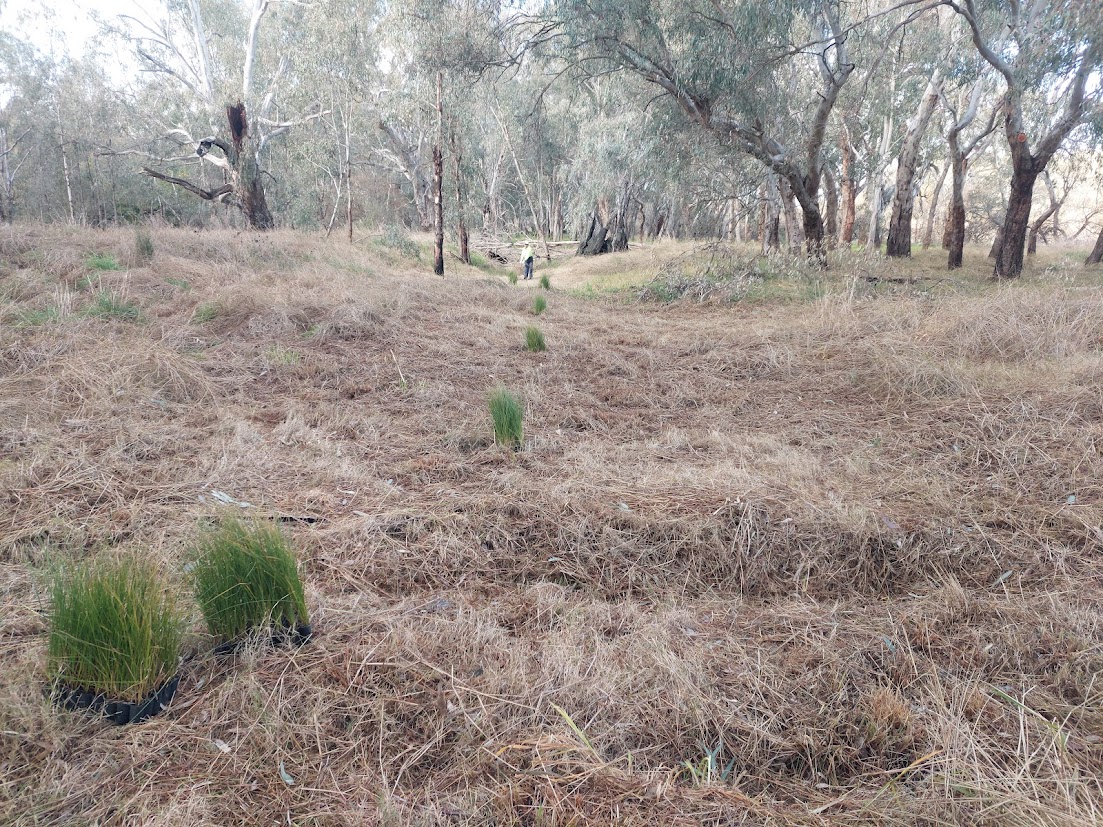
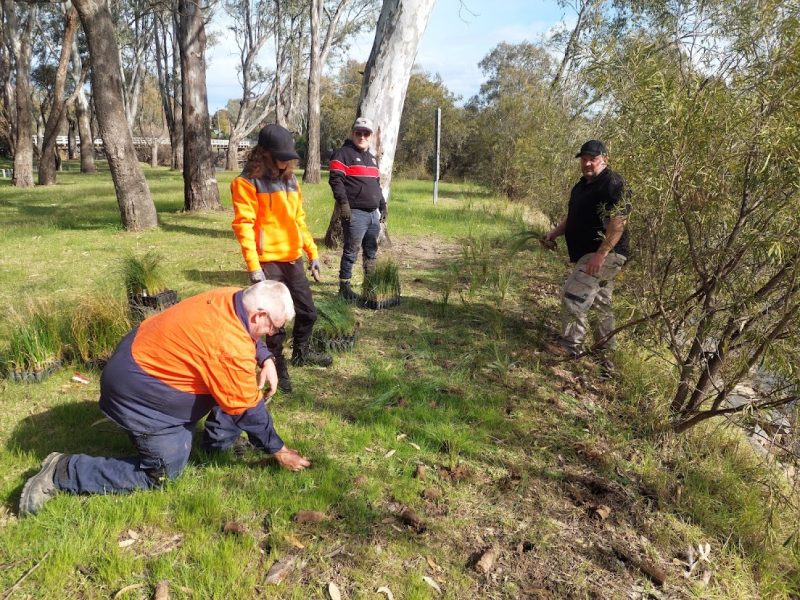
Restoration works across Bonegilla’s wetlands have been completed despite the dry winter. Actually, the dried-out wetlands have made it easier to prepare sites and undertake the plantings without the need for gum boots! Whilst it is difficult to imagine these sites inundated during dry times, it only takes a few days of rain for the ephemeral wetlands to become a watery paradise and important breeding grounds for creatures such as frogs. It’s crucial that wetland grasses be present in these habitats to provide shelter and protection from predators as well as attracting insects that the frogs prey on. Some frog species lay their eggs on or around wetlands grasses and tadpoles can use the dense cover to hide. Other species such as turtles, crayfish, fish, and birds also utilise wetland grasses.
The role wetland grasses play in reducing erosion is also of importance – their roots bind soil particles, and above the ground, they reduce the amount of sediment washing away. They are also highly efficient as sequestering carbon from the atmosphere, and the term ‘blue carbon’ is often used when referring to carbon stored in wetlands. The intent of this ‘Blue Carbon Sinks’ project is to restore wetlands and waterways along the Kiewa and Murray Rivers where natural wetlands were once cleared for grazing.
The restoration has been a team effort with wetland grasses supplied by Jayfields Nursery and the volunteer run Our Native Garden Nursery.
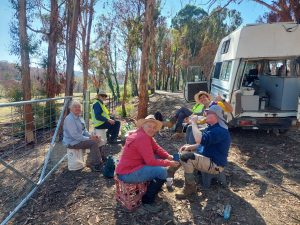
Thanks to Access Support Services for their assistance with plantings at Waterworks.
Thank you to the Foundation for Regional and Rural Renewal for their financial support through the Climate Solutions Program.