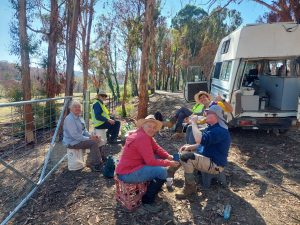
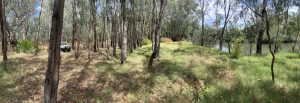
Once again our wildflower walks held on Oct 8 and 15 around Castle Creek Conservation Reserve as part of Wodonga’s Senior Celebrations were popular and the flowers did not disappoint!
These tailor-made, Ranger-led walks give our seniors the opportunity to discover the array of native wildflowers that we are lucky enough to have so close to town. Some participants said they had made visits to the reserve previously but weren’t aware of the diversity of wildflowers, and some said they didn’t know the reserve even existed, so it was our pleasure to take them off the beaten track to discover some special plants.
Thankfully the weather couldn’t have been better for both walks and nature put on quite a show for us with different species to spot even from one week to the next. This year we decided to make things a little easier for our participants with signs next to most of the plants that were in flower which allowed people to take a photograph or jot down the names of species of interest.
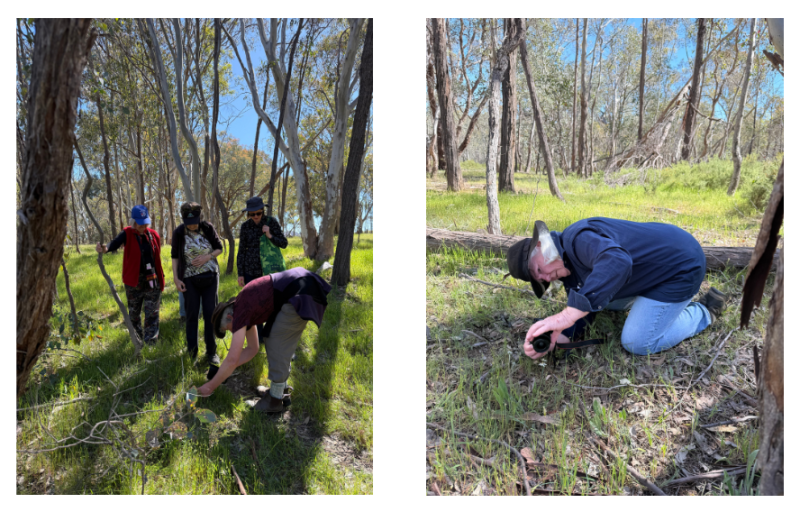
As we meandered through the reserve, our participants learned about historical land use, how the parcel of land became part of the WRENs (Wodonga Retained Environmental Network), and what kind of work Parklands have been doing there.
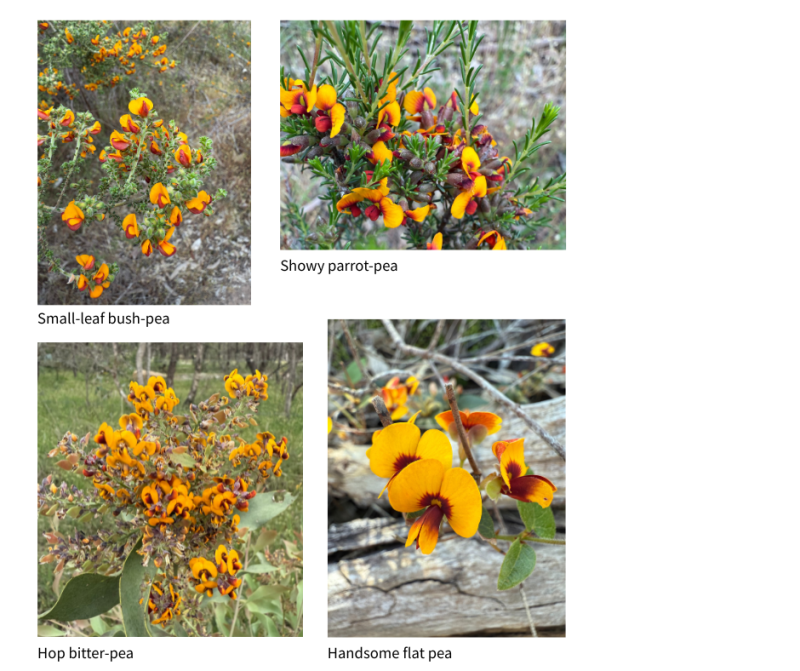
Just beginning to flower in the first week was the healthy population of small-leaf bush-peas (Pultenaea foliolosa) which are listed as endangered in Victoria. Among the bush-peas are another kind of pea known as showy parrot-pea (Dillwynia sericea) and when the two are all out together they make a spectacular show. Yet another pea that was out en masse was the hop bitter-pea (Daviesia latifolia). The handsome flat pea (Platylobium montanum) had finished flowering but still looked attractive with all its light green seed pods.
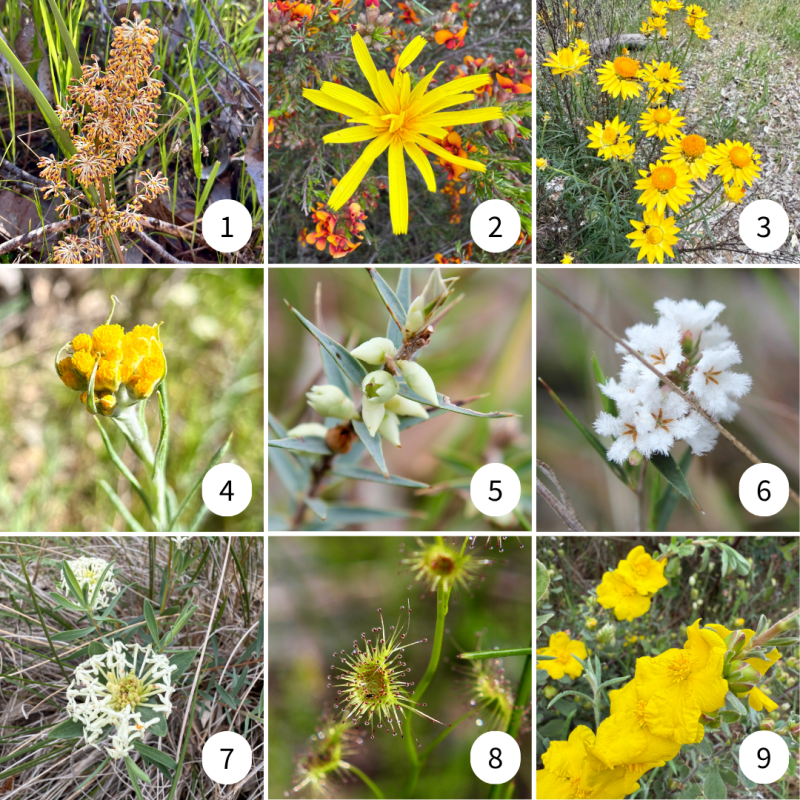
Other flowers that we stopped to admire included the many flowered matrush (1; Lomandra multiflora), murnong (2; Microseris walteri), sticky everlasting (3; Xerochrysum viscosum), clustered everlasting (4; Chrysocephalum semipapposum), urn heath (5; Melichrus urceolatus), common beard heath (6; Leucopogon virgatus), common riceflower (7; Pimelea humilis), sundew (8; Drosera spp.), and grey guinea-flower (9; Hibbertia obtusifolia).
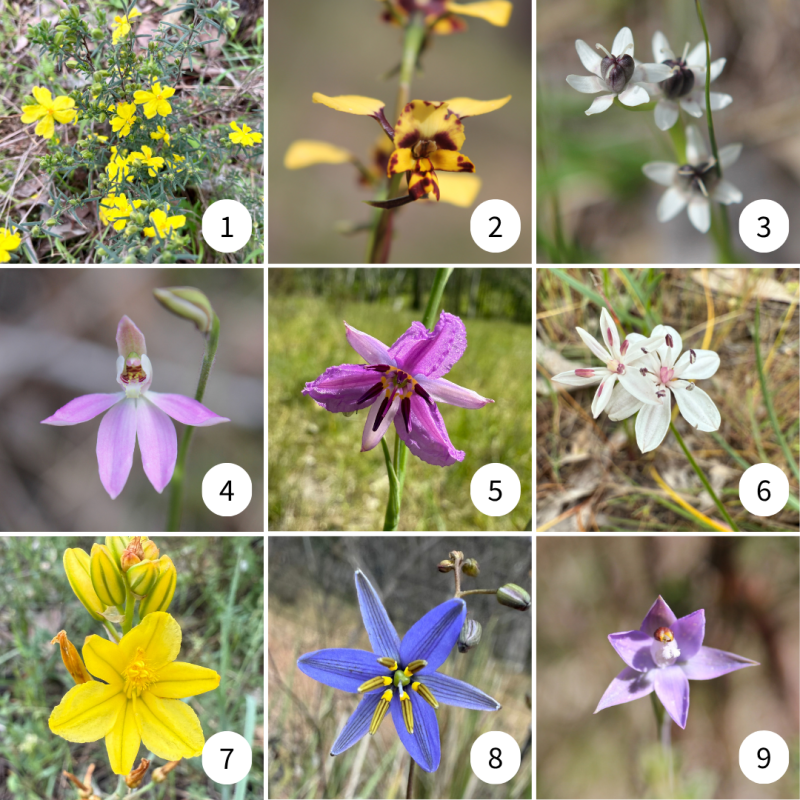
There were plenty of erect guinea-flower (1; Hibbertia riparia) to be seen while only a few leopard orchids (2; Diuris pardina) were still hanging on during the first week along with a tiny amount of early nancys (3; Wurmbea dioica). A couple of lady fingers orchids (4; Caladenia carnea) were dotted around and just beginning to come into bloom were the chocolate lilies (5; Arthropodium strictum), which really do smell like chocolate, and milkmaids (6; Burchardia umbellata). By the second week, bulbine lilies (7; Bulbine bulbosa) were beginning to flower along with flax lilies (8; Dianella revoluta) and we were surprised to see a couple of sun orchids (9; Thelymitra sp.) open despite being early in the day.
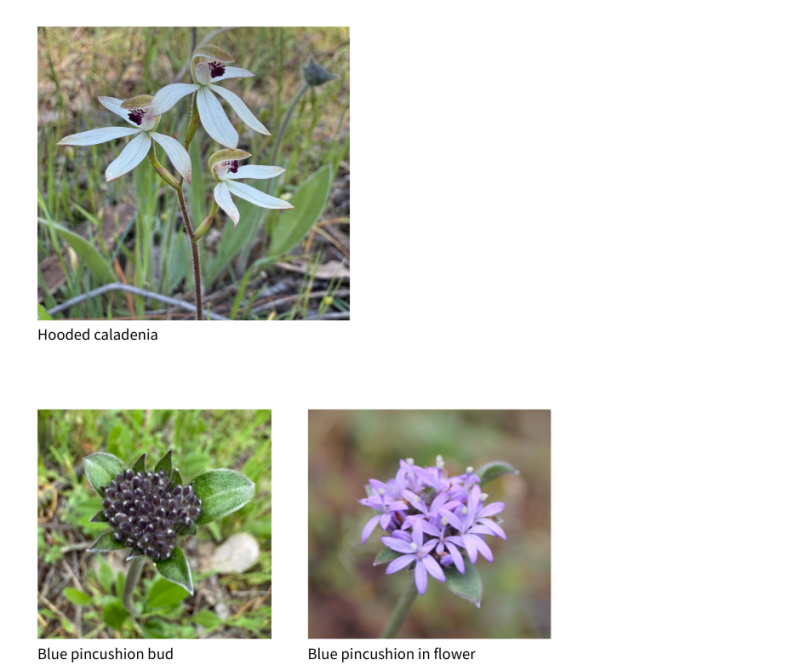
A single hooded caladenia (Caladenia cucullata) was spotted and while plenty of blue pincushions (Brunonia asutralis) were around, they were still in bud and have a little way to go before showing off their blue/purple flower heads.
Thanks to everyone who came along and hopefully we’ve encouraged people to take a closer look when out and about with a bit more of an appreciation of why our local reserves are so important!